Author: Steven Hovater

  • My (Our) Corona

    My (Our) Corona

    Covid-19 made it into the Hovater house this month for real. Lot’s of folks have asked, and I know there’s a good bit of curiosity and confusion about the coronavirus for folks who haven’t had much personal experience with friends or family that have had it yet, so I want to give an account of what it looked like for us. Hopefully that can personalize, clarify, and maybe destigmatize the disease just a smidge.

    Q: How did we get it?

    A: We don’t really know. We know we had some exposure from the kids at school (we get email notifications if our kids have been in classes with students or teachers who test positive. That seems like the most likely case, as one of our daughters in retrospect was probably the first to develop symptoms, even though at the time we (and the pediatrician) thought it was a case of Strep throat. (We had another daughter with similar symptoms who DID test positive for strep, and that threw us all off until Kelly tested positive for COVID.

    Q: What was testing like?

    A: Honestly, I was pretty impressed with the testing our local health department is doing. If you need a test, the site in Manchester at the Southern markets grocery building will get you in and out quickly. I got a result back from a nasal swab in less than 24 hours.

    Q: What has it been like? What symptoms did you have?

    A: Our symptoms have been relatively very mild, gratefully. What’s been fascinating has been the way the virus progresses, though. It sort of comes on in layers, so you have different symptoms at different times. We started out with mild fevers and then some fatigue and muscle aches. We were on Tylenol/ibuprofen to damper the fever, and that controlled it for me pretty well, except for one night I woke up just absolutely drenched with sweat. The muscle aches were weird…not really the whole body achy-ness you get with the flu, but super specific aches, almost like deep bruises. the fatigue was a couple of days, and just made us crash. We also had a slight brushes with the taste issues, but those haven’t lasted a long time (although here at the end my nose seems to be acting up and making things smell sparkly. I know that sounds weird, but it’s the best I’ve got.)
    We were getting those symptoms in something like two-days stretches, and then one set of symptoms would fade and something new would start. About 6 days in I got my first hint of the lung/breathing issues, which was the most concerning symptom—that’s one of the things where this stuff can get nasty and cause longer term problems. My doc got me on a steroid quickly, though, and I’ve worked to stay as active as I can, and the breathing issues have all but subsided after 5 days.

    The weirdest thing we had was I’ve had crazy hiccups. Like—four days worth of hiccups. It’s mostly just been a nuisance, but when the breathing issues were present, it was pretty uncomfortable, since they make you sort of gulp for air. But by and large we’re grateful for a pretty mild set of symptoms.

    Q: What kind of quarantine did you have to do?

    A: If you develop symptoms, you have to go 10 days from the start of the symptoms, as long as you end up fever free for the last few days of that. It get’s a little complicated if you have people in your house who don’t get the virus, but we’re pretty sure we all did, even though a couple of the kids cases just looked like very mild colds. That means we pretty much had to pull out of life for a bit, with the kids being given distance learning work for two weeks from the school (that’s the school policy for a household exposure.)

  • Lightbringer

    Lightbringer

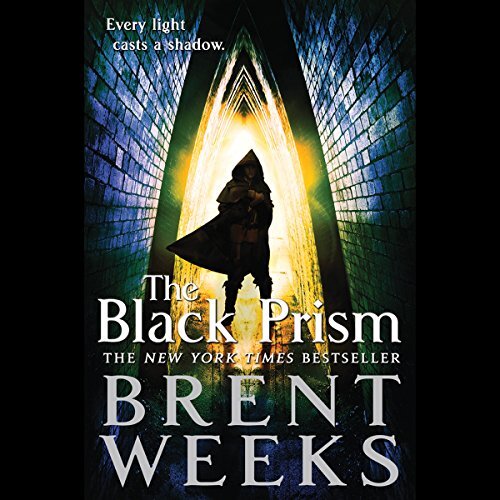
    The Lightbringer series by Brent Weeks sits perfectly at the intersection of my interests in fantasy epics and theology. If your interests are the same, and you don’t mind fiction seasoned with a dash of rude humor, you may love it like I did. (Nota Bene: Sometimes it’s a really hearty dash.)

    I don’t know if I’m recommending a book here, or an exercise program. For me, they’re more or less intertwined. About a year and a half ago I decide to commit myself to daily exercise. I have an ambitious movement goal on my watch, and I end most days walking a loop in my neighborhood, burning calories. It’s been effective for me, and I walk an average of 2 miles a day more than I did two years ago, and burn an extra 250 calories a day, which translates to an annoyingly small amount of food. But, I digress.

    Most days I reserve the walking time for listening to fiction on audio books. I don’t know when it happened, but somewhere in my life I shifted to prefer audio, maybe because I can walk and not get too restless and too quickly distracted form my “reading”. As a result, having a solid book to listen to helps me look forward to the walk, and some days it’s vice versa.

    I say all this because the first thing you need to know about the Lightbringer series is the sheer length of it. I have no idea how many pages, but the audio versions, performed excellently by Simon Vance, come in at about 135 hours. Like I said: I walk a lot. I honestly don’t know how anyone has time for such a series unless you do walk a lot, so that’s why I’m recommending both the books and the walking.

    Weeks has crafted a wonderful fantasy world, with a special blend of points of similarity and departure with our own world. The particular magical device the book leans heavily on worked for me—though some reviewers have found it overly complex.

    What I really loved about the book was the way the long arc of the story treats theological themes. From the divine image born by humanity, to an account of the brokenness and corruption of that image, the story resonates with theological motifs that are treated deftly. Indeed, the story progresses through theology in a sophisticated way, allowing the reader to experiment with different ways of thinking about God along the way. Weeks is not bashful about including biblical allusions, and readers who know their Bibles will find themselves discovering additional layers to parts of the story by calling to mind the biblical source material.

    Of particular significance is the way the story treats what theologians call “Theodicy”, the way we understand God in the light of human suffering. It may be that narratives and stories provide the very best way of studying the subject. A narrative generates empathy, and theodicy without empathy ends up being a little soulless and unhelpful. Fictive narratives almost do the job even better, allowing us to consider the suffering of the characters with just a smidge of distance—we’re emotionally involved, but without the high stakes that we have with a real flesh and blood person we know. Consider a spectrum of emotional involvement when it comes to thinking about suffering. From least to greatest emotional involvement it kind of goes like this:

    Abstract theology -> fiction -> people you don’t know -> people you know personally

    A full theodicy should work on all of those different levels—but it’s a tall order, and in particular, I think we struggle to bridge the gap if we simply try to leap from:

    Abstract theology -> people you know personally

    There’s just too much pressure there—we have to make our abstractions fit the experiences of our personal circles, because we’re deeply invested emotionally. It makes it hard to actually do the work of theodicy, probing for a way of understanding God’s presence in a hard cosmos.

    Fiction can play an important role, helping us test out ways of thinking about suffering, and God’s view of it without the highest stakes. We can be empathetic, but not so enmeshed that we can’t test out ideas. Like stepping stones across a creek, good stories help us build a bridge between the abstractions of theology and the sufferings we know about, bear witness to, and even experience ourselves.

    The Lightbringer series does this well, with a cast of round characters who sometimes bring evil upon their own heads and are sometimes the victims of other’s choices. The theological setting—a world of faith that intersects with our own, but is not identical–allows for Weeks to test out ways of thinking of suffering and God’s view of it, iterating as some accounts are found insufficient to the task by the characters along the way. The characters in the story refuse to settle for easy answers as they meet their hardships, and the reader goes along that journey with them, testing more nuanced ways of thinking about God as the story goes.

    There’s substance to this series—but lots of fun along the way, too. It’s a story that somehow reveres God while being wildly irreverent at points. I loved it.

    If that sounds like the kind of thing you might like, give it a try. But you may need to get a fresh pair of walking shoes, too.

  • Black Lives Matter

    (The headline IS the post.)

  • Here in Tullahoma

    Here in Tullahoma


    In the wake of George Floyd’s death at the hands of a police officer in Minneapolis, the United States has witnessed massive protests and a renewed call for reforms in policing to protect Black Americans from abuse and violence.

    It is foolish to imagine that the issues sparking the protest exist only in far away places and not within our community. I call on my neighbors in Tullahoma to consider the wisdom of taking proactive action to address the concerns of the Black Lives Matter movement.

    First, consider that the issues of racism are both personal and systemic. Individuals act and speak in racist ways, and truly we can say that the guilt lies with them for acting out of the corruption of their hearts. But it is also true that racism has deep roots within the communities of our country. Its hand has carved the very structures of many of our institutions and has specifically shaped Tullahoma in significant ways.

    I am very grateful that our local police department is made up of many wonderful people. Their character and devotion to their duty is an essential element to the department’s success—indeed, the most important one. But relying on the character of individuals without appropriate systems is to court disaster.

    While we presume in good faith that our law enforcement personnel are individuals of character and integrity, we entrust them with certain levels of power in our community. The American way has always been to be leery of distributing power to agents of the state. Any power given must be appropriately checked and restrained. Persons who are perceived as too powerful will always be met with distrust and resistance. In our current cultural climate, this perception—regardless of its veracity—escalates the tensions between law enforcement communities and the citizens they serve, and creates more danger for those whose duty is already fraught with risk.

    Neglecting systems of accountability and systems which cultivate professional standards of non-racist behavior imperils both individual officers and citizens. Creating such appropriate systems—and communicating them openly—is simply a requirement if we are to continue to dismantle the legacy of racial injustice.

    Fortunately, paths forward have emerged as communities have sought solution and developed systems appropriate for their contexts. I offer the following, knowing that some of the suggestions may indeed not fit our context. However, these are reasonable and readily available starting points for discussion, and I submit them hoping that our community can have an honest, robust conversation about the best way forward.

    1. I am certain that there are steps already active in Tullahoma. Indeed, I would not be surprised if some of the steps outlined below are already implemented! However, the community would greatly benefit from clear communication of those steps. I call on the city to make publicly available, via the city’s website, currently active policies and procedures designed to ensure fair and equitable treatment of citizens by police, regardless of race.

    2. The city should create regular structured and informal opportunities for dialogue between law enforcement personnel and the community, particularly the African American community within Tullahoma.

    3. The city should implement and publicize regular de-escalation training for law enforcement personnel.

    4. The city should implement and publicize regular training to address implicit bias within the law enforcement context. This should also become part of the screening process for personnel.

    5. The city should implement body camera systems and policies to ensure their usage creates reliable accountability.

    6. The city should publicize the appropriate channels for complaints of unfair treatment so that citizens may have confidence that their concerns will be taken seriously.

    7. The city should publicize how the police department measures performance in this area for both the entire department and for individual personnel.

    These are by no means complete solutions. The issues are far ranging from such local policing issues to issues throughout the criminal justice system and beyond. But these are places where we can start, here in Tullahoma, so that our community lives up to its ideals of being a community where all of its citizens flourish.

    In Peace,
    Steven Hovater

    Note: I will update this post as other information becomes available.


  • Choosing and Chasing

    When I first read this post by Bradley Moore, I couldn’t help identifying with his middle school tale of self-reinvention (the eighth grade wasn’t particularly kind to me), and I started thinking about the tension we live in between the lives that are given to us and our own ability to determine our selves.

    It’s a pretty live question for me how much possibility for self-determination really exists. I tend to think it’s different for different people. You didn’t get to choose all your circumstances, and some of those have an extremely powerful influence on the person you are and will continue to be. Even becoming fully aware of all the things that influence who we’ve become can be tough—rewriting ourselves in the midst of that can be even tougher.

    But you have to try.

    You have to fight for the possibility that you can grow, change, and struggle to become someone else. Sometimes you have to restructure some of the things in your life, enlist help from other people and God, and just dig into the struggle to become the person you discern God called you to be. Because while I don’t think we have absolute power over our own self-determination, the minute we give in and just accept ourselves as accidents of fate, the moment we accept the way we are as the way we have to be, we get stuck. We stop growing. And the minute any living thing stops growing, it starts dying.

    There’s a famous Lombardi quote from when he arrived to coach the Packers: “Gentlemen, we are going to relentlessly chase perfection, knowing full well we will not catch it, because nothing is perfect. But we are going to relentlessly chase it, because in the process we will catch excellence.” That’s really the way it is: You have to be willing to chase some things that ultimately might be out of your grasp, because we humans are at our best when we’re chasing something. But we don’t have to chase anything, and there are infinite choices about what we’re going to pursue.That’s why intentionality, the practice of making distinct choices about who we want to become and what we want to do, is so important.

    You don’t get to make all the choices, but the ones you do get to make matter. They really, really, matter.

  • Covid-19 and Reclaiming Your Most Valuable Resource

    The isolation demanded by COVID-19 clarifies a distinction I’ve been wanting to make for a while regarding our most precious resource—what it is, and what it isn’t.

    Many people will say that our most precious resource is time, and for good reason. Time is finite, and we often feel ourselves needing more of it. We call it being “busy”, and we do fill our lives with time-demanding activity, but I think that is actually a mask of the real problem.

    In this moment, when we’ve had a significant number of demands on our time stripped away, the angst of being low on time has been just as quickly replaced. The same feeling is there, but now attaches itself to other causes. Although many of us have had to do our work in different ways, and that certianly takes a new share of time, the reality is that many of us now have something of a time-surplus. And yet, the thing that we used to name “I just wish I had more time” still remains.

    I suggest that the actual scarcity has never been time, but attention. It is that resource which is impinged upon from countless directions, and this has not relented even in the midst of our physical isolation. Even as our activity calendars have drastically changed, we are presented with new pulls on our attention, and these are even more fierce than before.

    This moment presents an opportunity to be truthful about our scarcity of attention…and to reclaim it with intention. One of the most significant things you can do through this crisis is become more purposeful in how you spend and invest your limited attention.

  • Covid-19 and Reclaiming Your Most Valuable Resource

    The isolation demanded by COVID-19 clarifies a distinction I’ve been wanting to make for a while regarding our most precious resource—what it is, and what it isn’t.

    Many people will say that our most precious resource is time, and for good reason. Time is finite, and we often feel ourselves needing more of it. We call it being “busy”, and e do fill our lives with time-demanding activity, but I think that is actually a mask of the real problem.

    In this moment, when we’ve had a significant number of demands on our time stripped away, the angst of being low on time has been just as quickly replaced. The same feeling is there, but now attaches itself to other causes. Although many of us have had to do our work in different ways, and that certianly takes a new share of time, the reality is that many of us now have something of a time-surplus. And yet, the thing that we used to name “I just wish I had more time” still remains.

    I suggest that the actual scarcity has never been time, but attention. It is that resource which is impinged upon from countless directions, and this has not relented even in the midst of our physical isolation. Even as our activity calendars have drastically changed, we are presented with new pulls on our attention, and these are even more fierce than before.

    This moment presents an opportunity to be truthful about our scarcity of attention…and to reclaim it with intention. One of the most significant things you can do through this crisis is become more purposeful in how you spend and invest your limited attention.

  • Vital Signs

    In the midst of the Covid-19 pandemic, we’re all experiencing an extreme disruption. In case I’m misinterpreted in what I’m about to write, let me be crystal clear at the beginning: that disruption is bad. A lot of people are going to be hurt by the disease and by the societal problems cascading from it. Everyone, please take care of yourselves and your community by honoring the physical distancing steps recommended by public health experts.

    But disruption also creates opportunity. Sometimes, by forcing us to reconsider “normal” and all that comes with what we usually call normal.

    One way I’m using this time of disruption is to check on some vital signs for my life. Not just the pulse, BP, temp, and other signs that my body is functioning well, but the vital signs of my spirit.

    This pandemic, with its forced isolation and the disruption of activity, creates the opportunity for us to really consider our inner lives. It invites us to reconsider the quiet places of our hearts, the parts that are usually drowned out by the bustle of the lives we sustain. As we withdraw into private spaces, we also have the opportunity to experience quiet. And in the quiet, we confront the vital signs of the spirit.

    Capacity for stillness. When I am still, do I easily become restless? Can I remain still for a moment without becoming anxious?

    Patience. Can I endure inconveniences with an appropriate emotional reaction? In other words, do I fly off the handle because a child is being louder than I like, or become enraged when I’m forced to wait for moment?

    Clarity of Concern. It’s okay to have concerns. A healthy spirit is not simply without any sort of desire for things to be different in the world! Indeed, we easily become too comfortable with injustices or the presence of broken systems! But a healthy spirit can discern what it is actually anxious about. It understands what is making it uncomfortable, precisely, without remaining anxious in a general, diffused way.

    Joy and Gratitude When I am healthy in my spirit, I have joy! I may have struggle and pain right along side of it, but I can also consider the things which bring me life, facets of my life that I can name with thankful joy. The lack of elements of joy in my life is a sign that my spirit has been distorted.

    Healthy Detachment A person with a healthy spirit is engaged with the issues of her community, but can also recognize that what is happening around her is not the same thing as what is happening in her. there is a way of engaging without becoming passively entailed with the emotional currents around me.

  • Vital Signs

    In the midst of the Covid-19 pandemic, we’re all experiencing an extreme disruption. In case I’m misinterpreted in what I’m about to write, let me be crystal clear at the beginning: that disruption is bad. A lot of people are going to be hurt by the disease and by the societal problems cascading from it. Everyone, please take care of yourselves and your community by honoring the physical distancing steps recommended by public health experts.

    But disruption also creates opportunity. Sometimes, by forcing us to reconsider “normal” and all that comes with what we usually call normal.

    One way I’m using this time of disruption is to check on some vital signs for my life. Not just the pulse, BP, temp, and other signs that my body is functioning well, but the vital signs of my spirit.

    This pandemic, with its forced isolation and the disruption of activity, creates the opportunity for us to really consider our inner lives. It invites us to reconsider the quiet places of our hearts, the parts that are usually drowned out by the bustle of the lives we sustain. As we withdraw into private spaces, we also have the opportunity to experience quiet. And in the quiet, we confront the vital signs of the spirit.

    Capacity for stillness. When I am still, do I easily become restless? Can I remain still for a moment without becoming anxious?

    Patience. Can I endure inconveniences with an appropriate emotional reaction? In other words, do I fly off the handle because a child is being louder than I like, or become enraged when I’m forced to wait for moment?

    Clarity of Concern. It’s okay to have concerns. A healthy spirit is not simply without any sort of desire for things to be different in the world! Indeed, we easily become too comfortable with injustices or the presence of broken systems! But a healthy spirit can discern what it is actually anxious about. It understands what is making it uncomfortable, precisely, without remaining anxious in a general, diffused way.

    Joy and Gratitude When I am healthy in my spirit, I have joy! I may have struggle and pain right along side of it, but I can also consider the things which bring me life, facets of my life that I can name with thankful joy. The lack of elements of joy in my life is a sign that my spirit has been distorted.

    Healthy Detachment A person with a healthy spirit is engaged with the issues of her community, but can also recognize that what is happening around her is not the same thing as what is happening in her. there is a way of engaging without becoming passively entailed with the emotional currents around me.

  • Can’t Win ‘Em All

    My team went down hard tonight as Clemson plowed Bama in the championship game.The ups and downs of sport fandom is a crazy ride, and while this stretch with Bama has been fun, it still stabs me between the ribs sometimes…that’s part of the spirituality of sports. They challenge you to invest, toy with you, then ask why it really matters, waiting to see if you can, at the end of the day, hold it lightly.They ask, “You don’t care too much, now do you?”Then they patiently wait for an answer.Then they put you through the cycle again.