Author: Steven Hovater

  • Apollos

    Apollos

    Apollos is a fascinating person in the story of the New Testament. He features prominently in a story in Acts 18, and Paul mentions him in 1 Corinthians and Titus. Besides that, he is rather mysterious. though some have speculated that he might be the author behind Hebrews, there isn’t much definitive evidence to support such a conclusion.

    Here is what we can gather from the New Testament about Apollos:

    • He was a Jewish Jesus-follower (Acts 18:24)

    • He was a native of Alexandria (in Egypt) (Acts 18:24)

    • When he came to Ephesus he only knew the “baptism of John” (as opposed to Jesus baptism) (Acts 18:25)

    • He was an eloquent and passionate teacher. (Acts 18:24-25)

    • He willingly learned from Priscilla and Aquila. (Acts 18:26)

    • He was a traveling teacher.

    • He came to Ephesus (modern day Turkey) soon after Paul (Acts 18:24)

    • He also spent time in Corinth, where some of his loyal followers developed a rivalry with followers of other Christian teachers (1 Cor 1:12)

    • Paul refers to him as someone who watered what he had planted. (1 Cor 3:5-6)

    • Paul later encouraged him to return to Corinth, but he didn’t want to at that time, and delayed a return to Corinth (1 Cor 16:12)

    • He was with Titus in Crete, along with a lawyer named Zenas. (Titus 3:13)

  • Setting the Agenda: The Prologue of Acts (Acts 1:1-5)

    Setting the Agenda: The Prologue of Acts (Acts 1:1-5)

    The opening verses of Acts are easily skipped over by readers eager to get to the action. Yet, even before the camera has made its way to focus on the characters of the drama, the narrator’s voice over tells us a lot about what’s at stake in this particular drama.

    In the first book, Theophilus, I wrote about all that Jesus did and taught from the beginning until the day when he was taken up to heaven, after giving instructions through the Holy Spirit to the apostles whom he had chosen. After his suffering he presented himself alive to them by many convincing proofs, appearing to them during forty days and speaking about the kingdom of God. While staying with them, he ordered them not to leave Jerusalem, but to wait there for the promise of the Father. “This,” he said, “is what you have heard from me; for John baptized with water, but you will be baptized with the Holy Spirit not many days from now.”

    -Acts 1:1-5, NRSV

    Notice that we begin with a tight summary of the gospel of Luke, of which Acts is to be the sequel work: it was a book about all that Jesus did and taught. Luke centers the actions—healings, exorcisms, etc—along with the things Jesus taught. His life, including his suffering and resurrection, is the anchor that orients us to what’s important in Acts.This seems simple enough, but too many readers of Acts don’t connect this book with the things Jesus did and taught in the gospel. Everything we’re going to read in this sequel flows from the actions and teachings of Jesus. Indeed, I prefer the NIV translation of the first verse: “all that Jesus began to do and to teach” The former book contained the beginnings of his actions and teachings, which are going to continue in this book!

    We may wonder if the phrase “the instructions that were given through the Holy Spirit” refers to all the teachings of Jesus in the first book, and it may, but I tend to think that particular phrase points towards this passage at the very end of Luke:

    Then he said to them, “These are my words that I spoke to you while I was still with you—that everything written about me in the law of Moses, the prophets, and the psalms must be fulfilled.” Then he opened their minds to understand the scriptures, and he said to them, “Thus it is written, that the Messiah is to suffer and to rise from the dead on the third day, and that repentance and forgiveness of sins is to be proclaimed in his name to all nations, beginning from Jerusalem. You are witnesses of these things. And see, I am sending upon you what my Father promised; so stay here in the city until you have been clothed with power from on high.”

    – Luke 24:44–49 NRSV

    These words from the resurrected Jesus thus set the agenda for the book of Acts, and we wait the infusion of “power from on high”. When that Spirit arrives it will drive the story of Acts, just as it often drove the story of Luke. The same Holy Spirit that was on the move through Jesus in the gospels is going to move now through his disciples.

    A Prologue to discipleship

    Acts 1:1-5 is a fitting prologue for the book, but also worth considering as a prologue for our lives as disciples today. What if we thought of our own lives as being anchored in the actions and teachings of Jesus—a continuation fueled by the Holy Spirit of Jesus’s own story? The Jesus who “began” to act and teach in the gospels wasn’t finished—his actions and teachings continued in the stories of Peter, Paul, and the others. And the story of Jesus goes on today! He is still alive, and still working and teaching, still reaching towards the world through his Holy Spirit, at work in his disciples.

  • Advent Playlist 2022

    Advent Playlist 2022

    I just released a new playlist for Advent. The 2022 list leans into longing, and I’ve really enjoyed on working on it, collecting songs throughout the year. Any time I landed on a song that hit the sort of hopeful longing tone I associate with advent, I dropped it on the playlist. In October, I went back, culling the list and looking for some missing pieces. I’m happy with how it’s turned out.

    I told a friend yesterday that “It’s an interesting way to do theology…kind of like a collage, cutting scraps here and there to create an impression.” That feels right to me.

  • New

    New

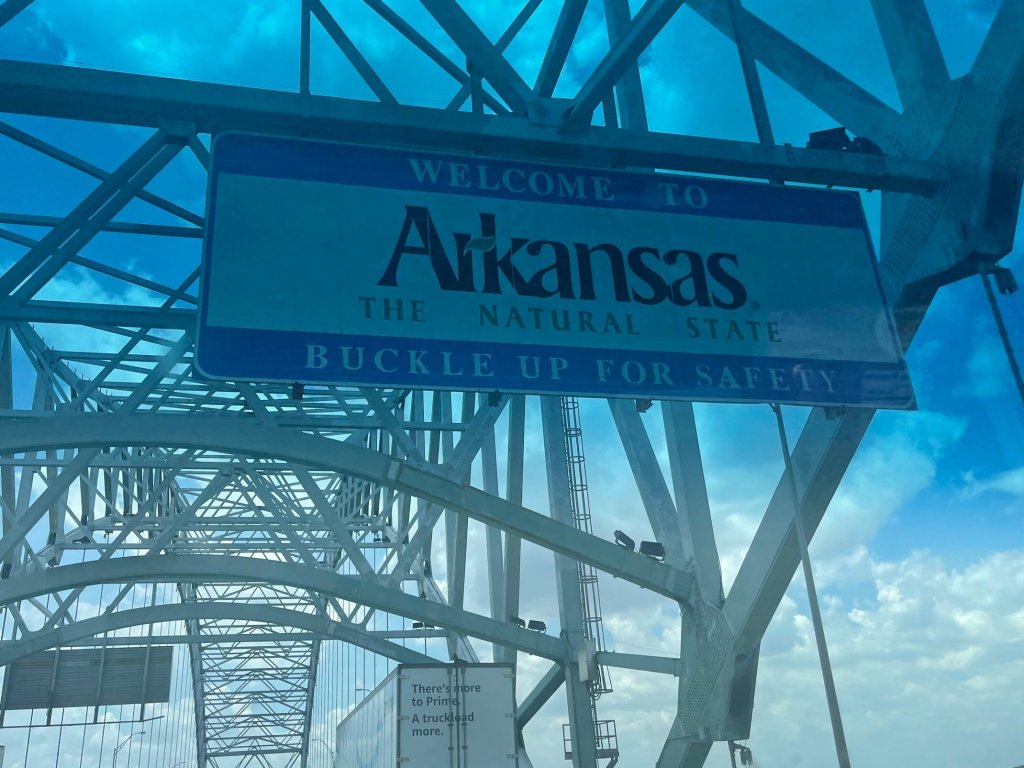
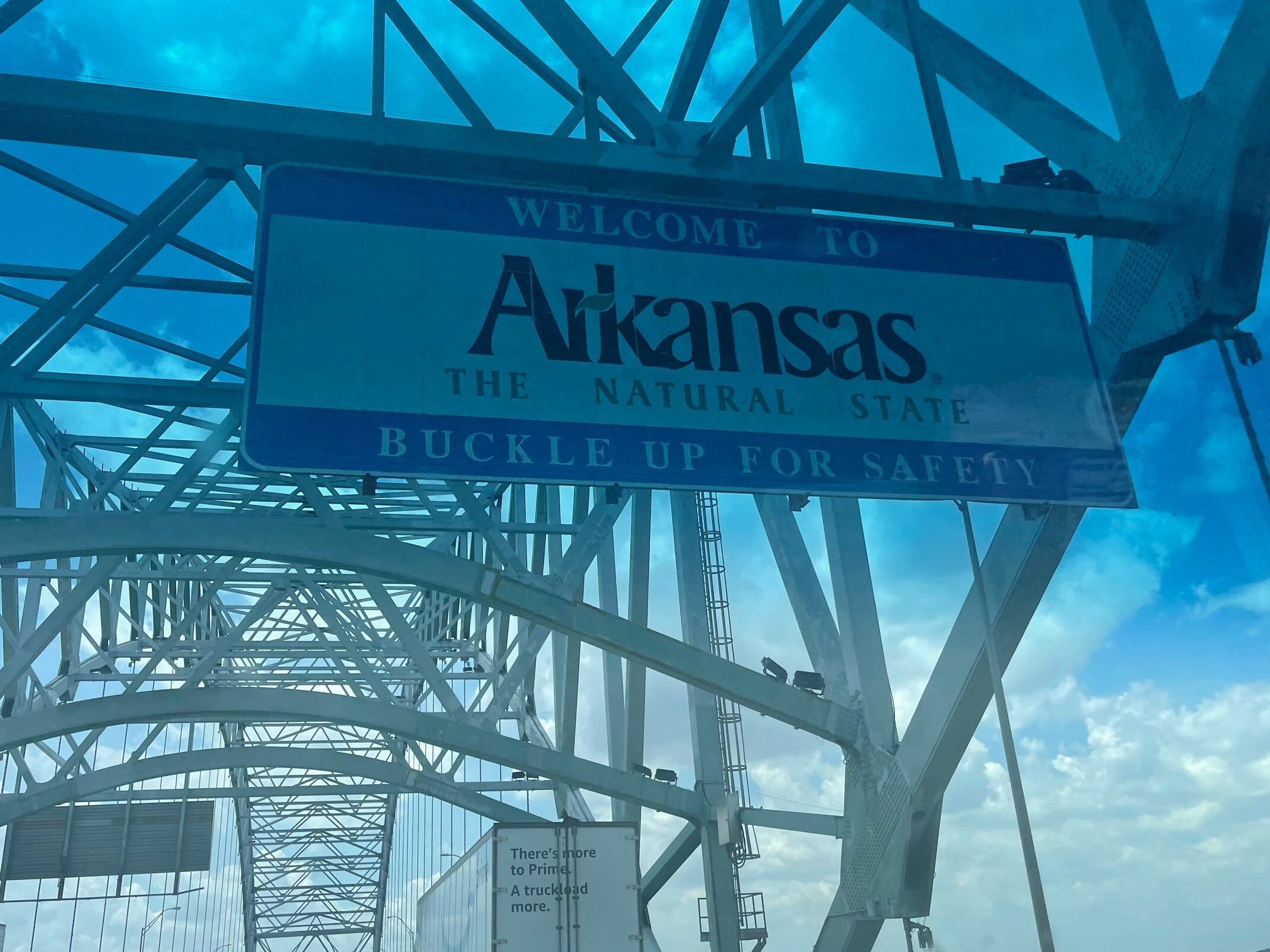
    I started a new partnership today, working at the Central Church of Christ in Little Rock, Arkansas.

    It’s a sort of homecoming for Kelly and I, having spent a decade here before the last twelve in Tennessee (2010-2022). Of course, for our kids it all feels like starting over from scratch.

    New chapters can come with all kinds of emotions, and we’ve felt them all—the excitement of a new challenge and the grief of separating from some beautiful friendships.

    This is a time in our lives of finding new friends, discovering a new neighborhood, building new habits and routines.

    New.
    That word can hold all kinds of promise—and challenges too.

    May God be with us, and may the Christ who says “Behold, I am making all things new” lead us into this new chapter.

  • The Trajectory We Are Choosing

    The Trajectory We Are Choosing

    Jonathan Haidt has an article for the Atlantic out this week in which argues for a perilous trajectory of American society. In Haidt’s view, that trajectory as been largely plotted the in the last decade and a half by the advent of viral social media culture. Fueled by the seemingly innocuous innovations of like and share buttons on social platforms, Haidt argues that digital culture now has become performative rather than expressive. Instead of encouraging honest, good-faith engagement, viral culture means that well-reasoned, nuanced views, digital culture punishes candor with a barrage of trolling or venomous condemnation.

    The algorithms love conflicts and rage—the Robots know that feeding our baser instincts will lead to more profits. The Robots know we engage with content that gets us riled up. The Robots know we love to hate. Thus, they constantly train the users of social media to engage in the performance of cynicism, for such will likely be rewarded with more views, likes, and shares.

    Haight also argues that the amplification of negativity is particularly effective not only when aimed att enemies, but when the target is an ally who their coalition’s doctrines. the boundaries of dogma (whether conservative or progressive), must be strictly enforced. No matter how slight the step out of bounds, the outcast must be pilloried to keep everyone else online. Thus our possibilities for dialogue or good faith conversation are snuffed out with prejudice.

    It’s easy to see from his argument how we begin to resemble an entire society of emperors wearing no clothes. Our polarization doesn’t simply exist in the wide gulf between the established sides, but in the strength of the gravity at each pole…drifting away from the extreme is more and more dangerous—at least dangerous to how the algorithms view you, I suppose.

    Haight offers some pragmatic systemic solutions to the trajectory, but leaves out that which simply requires greater virtues on behalf of the community. It may be that along with structural reforms, we also need to attend to the sort of character we bring to the social platforms and the greater public square.

    It matters how we interact. We are curating our own character along the way.

    Every choice I make to interact with a post, engage in a conversation, or share content, will have a multiplicative value—the algorithms will take each choice I make and feed me opportunities to make similar ones, like gravity turning a snowball into an avalanche. Recognizing the larger trend, I am compelled to consider not only what I’m contributing the the greater cultural conversation (as small as that impact might be), but also what I’m forming in myself as well.

    Dare we choose to restrain our outrage and cynicism? Dare we choose to reach again towards each other, seeking connection, rather than chasing likes?

    If you think so, be sure to share my post, follow me, like me, etc, etc. Or don’t. I’m learning to be less concerned either way, and perhaps we’ll all be better off that way.


    Afterthought: One strange thing that Haight leaves out is that while he points out the dangers of our societal enemies using viral social media for divisive ends, he leaves out any real discussion of the most viral of social apps now: TikTok. How anyone can have a paragraph about the topic of China using social media to ill purposes without commenting on TikTok is a bit beyond me.

  • Trees

    Trees

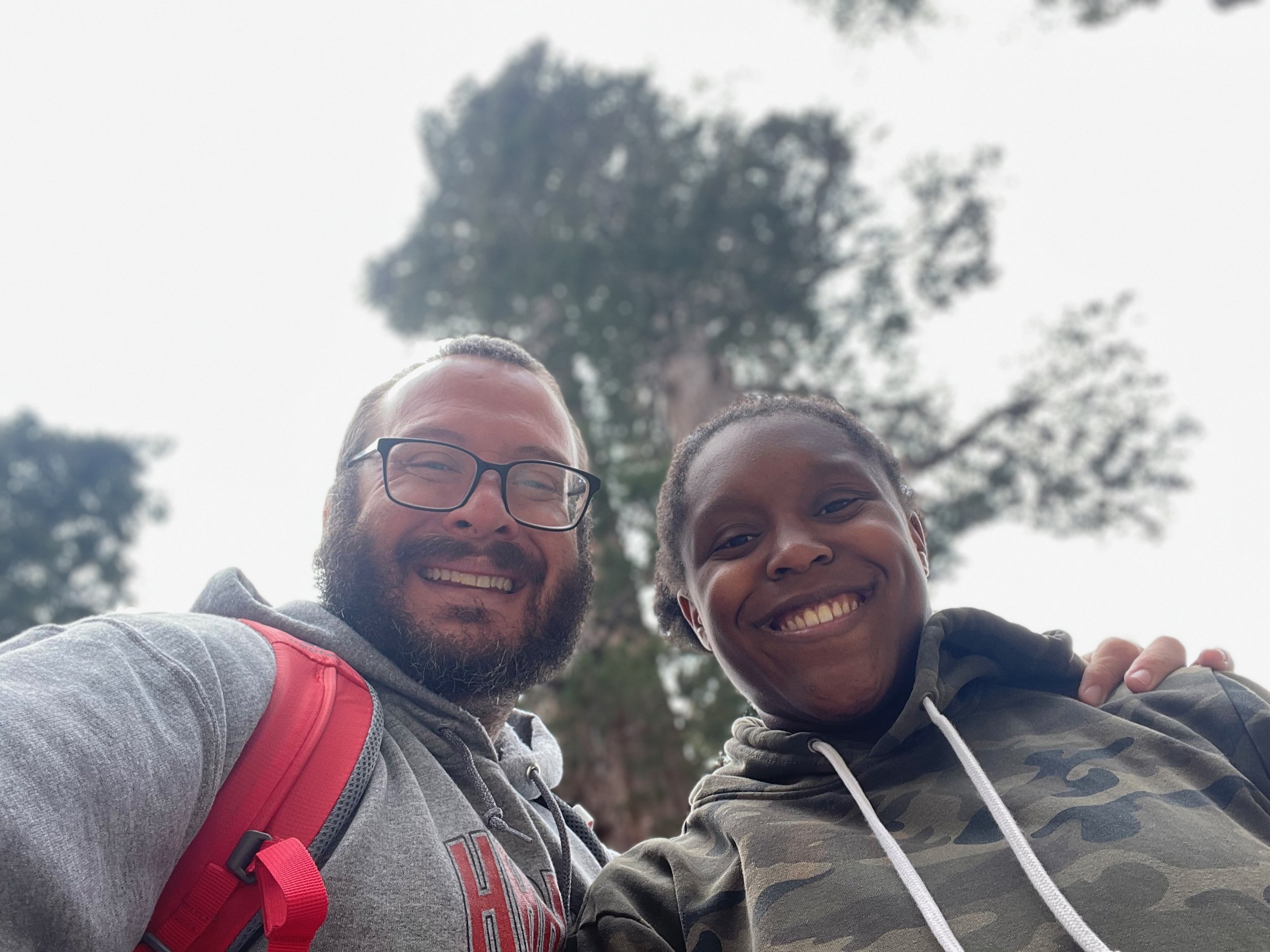
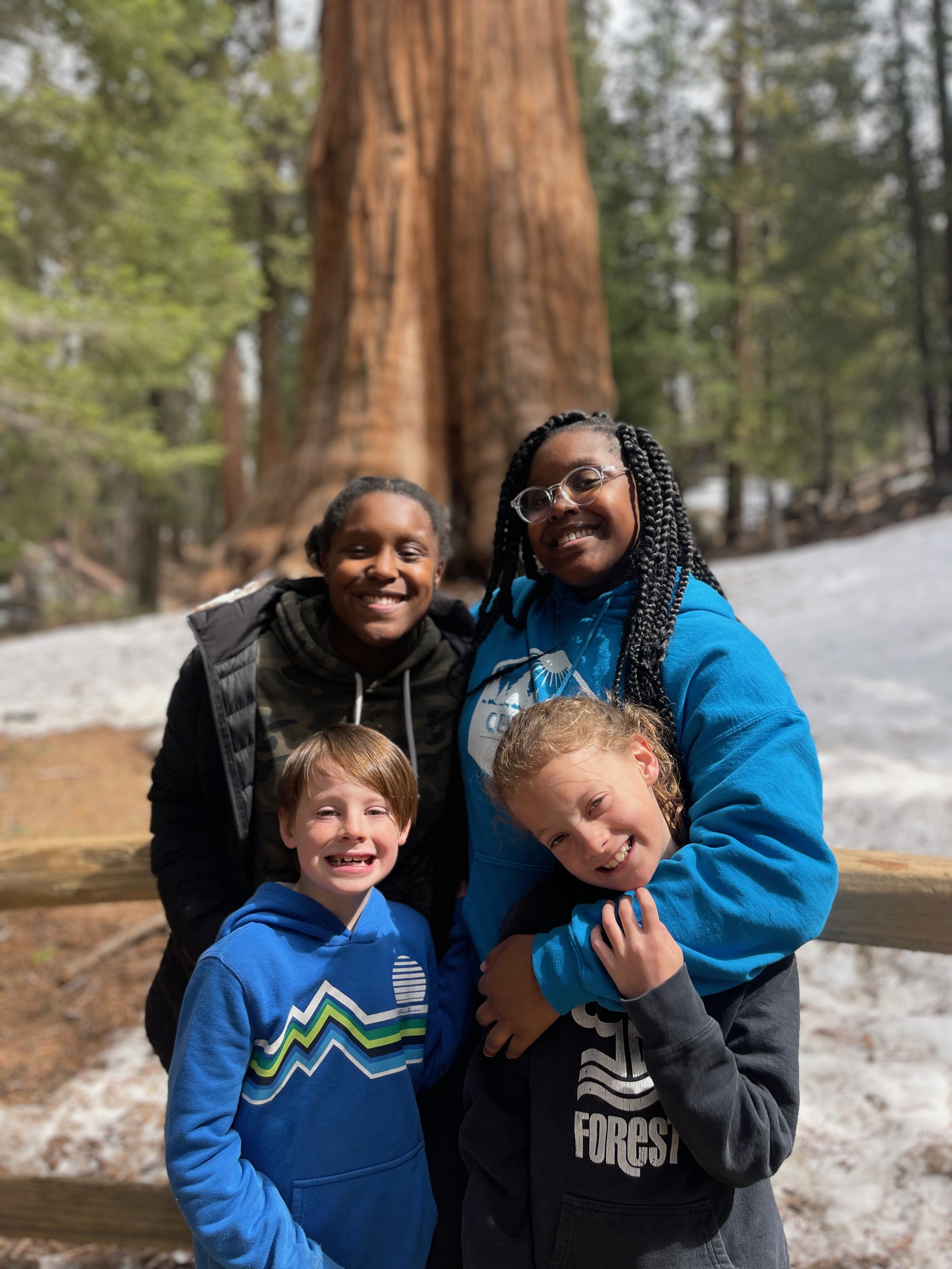
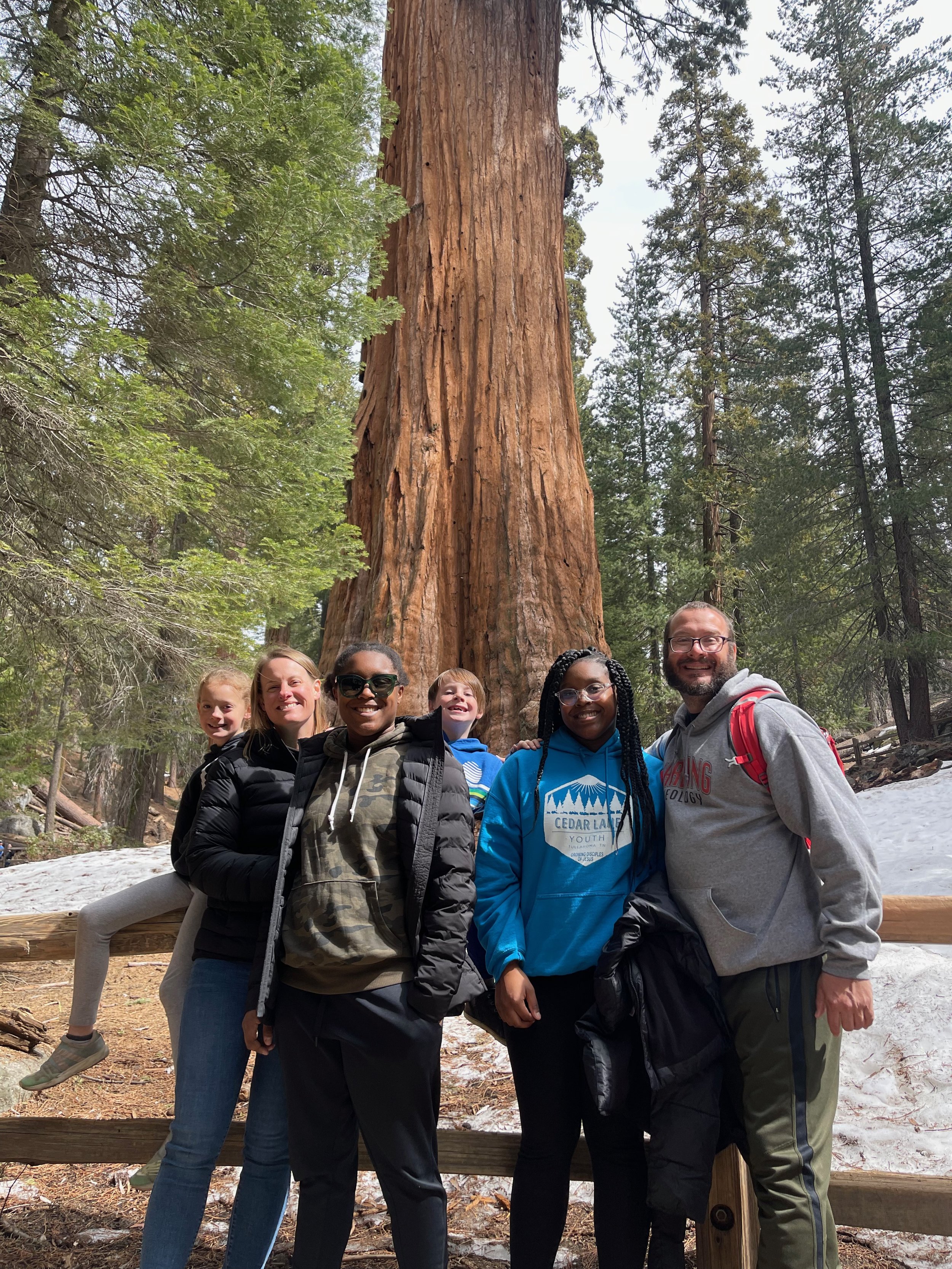
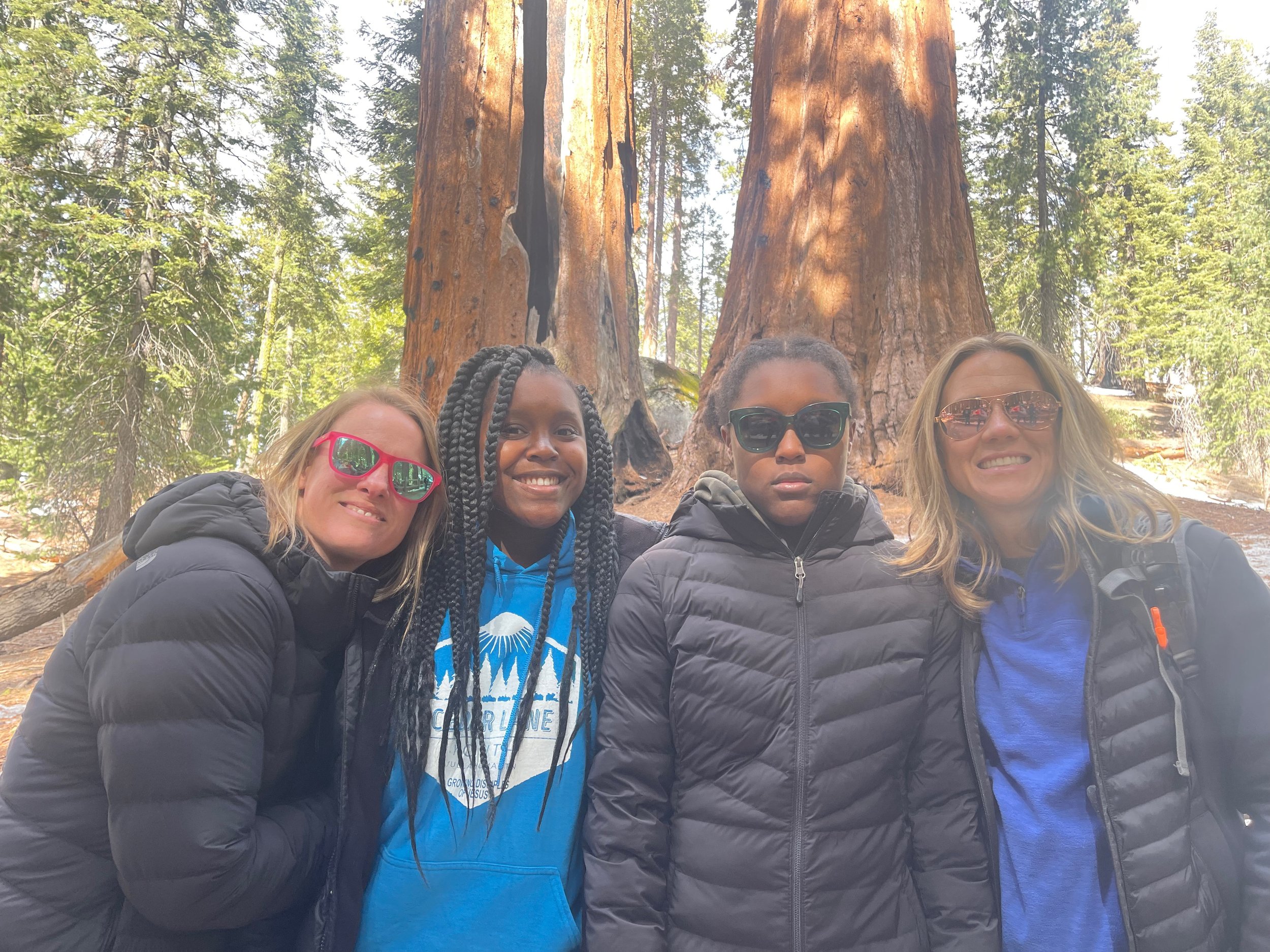
    This week, the Hovaters made our way to Fresno to visit Kelly’s family. Their home is just over an hour away from one of our world’s treasures—the groves of giant sequoia trees nestled in the Sierra Nevada mountains.

    These trees can stretch a few hundred feet in the air, and by volume are the largest trees on earth. Some of them have been alive since before the fall of the Roman Empire.

    It’s hard to conceive of a thing like that, a being who has seen that many summers and winters.

    When I go to the trees, I’m not really sure what to do with myself. I think if I was just by myself, I’d perch myself in front of one on a rock with a mug of coffee, and just soak in the forest. But that’s not my stage of life; I mostly meandered around watching my kids take in the wonder of it all at a less than meditative pace.

    And that’s not a bad thing. It was a day for play, for scampering around at the feet of these majestic creatures—and remembering we are creatures ourselves.

    (And I still got to catch a few moments to reflect on a rock.)

  • Celebrating and Waiting

    Celebrating and Waiting

    It’s about halfway through advent this year—the season commemorating God’s arrival in the incarnation of Christ and which also points towards his impending return as the king of the cosmos.

    My own church’s heritage has not often paid heed to the traditional church calendar. And yet, things come back around, and as many in my generation have explore seasons such as Advent, Lent, and Pentecost, we have rediscovered their usefulness for training us in the way of Jesus.

    For my own part, I’ve found it very useful to have a time of sustained reflection on Jesus’s coming into the world. This year I’ve meditated on the tension present between our proclamation of God’s continual presence and our proclamation of his return—Is he here, or is not here but coming back?

    Perhaps it is mostly a matter of our perception. We catch glimpses of God’s presence, but are largely inattentive to the various ways God might be seen—God is present, but unnoticed. Many of our spiritual disciplines are meant to open us to noticing and experiencing God in the world. When we do, it is beautiful and staggering. But it doesn’t happen nearly enough for us—even when we think we are really looking. We are left longing for more.

    Perhaps we have to admit, eventually, that God’s presence in our world is still frustratingly veiled. It may not be within our capacity to perceive God’s presence continually in the world, because he has somehow obscured that presence just enough as to recede from our vision. We don’t really know why. All our reasoning on it—at least all I know about—leaves us unsatisfied.

    God remains with us. I hold that conviction.

    And yet, we await God’s return—a moment when God’s presence will be unveiled.We long and yearn for the light which illumines all things, for the murky dark to be disbanded.

    This is a season of leaning into that tension. It is a season for claiming the presence of God—and reclaiming our identity as a waiting people.

    For those who share my people’s unfamiliarity with the keeping of advent, I’m happy to share the document I created to introduce the season.

  • Waiting

    It’s about halfway through advent this year—the season commemorating God’s arrival in the incarnation of Christ and which also points towards his impending return as the king of the cosmos.

    My own church’s heritage has not often paid heed to the traditional church calendar. And yet, things come back around, and as many in my generation have explore seasons such as Advent, Lent, and Pentecost, we have rediscovered their usefulness for training us in the way of Jesus.

    For my own part, I’ve found it very useful to have a time of sustained reflection on Jesus’s coming into the world. This year I’ve meditated on the tension present between our proclamation of God’s continual presence and our proclamation of his return—Is he here, or is not here but coming back?

    Perhaps it is mostly a matter of our perception. We catch glimpses of God’s presence, but are largely inattentive to the various ways God might be seen—God is present, but unnoticed. Many of our spiritual disciplines are meant to open us to noticing and experiencing God in the world. When we do, it is beautiful and staggering. But it doesn’t happen nearly enough for us—even when we think we are really looking. We are left longing for more.

    Perhaps we have to admit, eventually, that God’s presence in our world is still frustratingly veiled. It may not be within our capacity to perceive God’s presence continually in the world, because he has somehow obscured that presence just enough as to recede from our vision. We don’t really know why. All our reasoning on it—at least all I know about—leaves us unsatisfied.

    God remains with us. I hold that conviction.

    And yet, we await God’s return—a moment when God’s presence will be unveiled.We long and yearn for the light which illumines all things, for the murky dark to be disbanded.

    This is a season of leaning into that tension. It is a season for claiming the presence of God—and reclaiming our identity as a waiting people.

    For those who share my people’s unfamiliarity with the keeping of advent, I’m happy to share the document I created to introduce the season.

  • On Post-Covid Church Free Agency

    On Post-Covid Church Free Agency

    unsplash-image-oMwEHgCrHJA.jpg

    The pandemic of 2020-2021 provoked anxious disorientation in a remarkable number of directions, and we will be compelled to wrestle with its effects for some time. Some of the threads are going to be tough to identify and understand because of how entangled they are with multiple factors of causality.

    In my world, one of the disorienting effects of the pandemic is what I’m calling “post-covid church free-agency”.

    In our church, when we returned to in-person gatherings, we found that more people than normal were choosing both to join and leave our congregation. Of course, every individual has their own reasons that are pushing or pulling them to/away us. There are a handful of common factors, but everyone experiences the cocktail of experiences just a bit differently.

    But, that individuality doesn’t erase that there is something broadly at work, something taking place across the greater systems. What is it?

    It strikes me that the pandemic has, perhaps temporarily, lowered the threshold of dissatisfaction required for people to leave communities they previously affiliated with. It created a period of “free agency” in which people felt free to rethink their commitments in ways they normally would not have. (An effect that doesn’t seem to be limited to churches, but is also felt by employers, neighborhoods, etc.)

    Now that might taken negatively, as a failure of commitment, or an epidemic of disloyalty. Maybe. But we might more helpfully think of it as a period in which disruption has created a crisis requiring increased intentionality. People have been shaken loose to rethink what it is they want to be investing in.

    That means this is a time for choices. Which also means that this is a time for clarity, for being crystal clear about what we are asking people to be a part of. Offering clarity with candor means humbly recognizing that our community (or yours) might not be for everybody—and it probably never was. Now, we can take stock and see who it is that actually intentionally buys in, who actively recognizes that community as something that they need and want to be a part of.

  • Valuing Truth

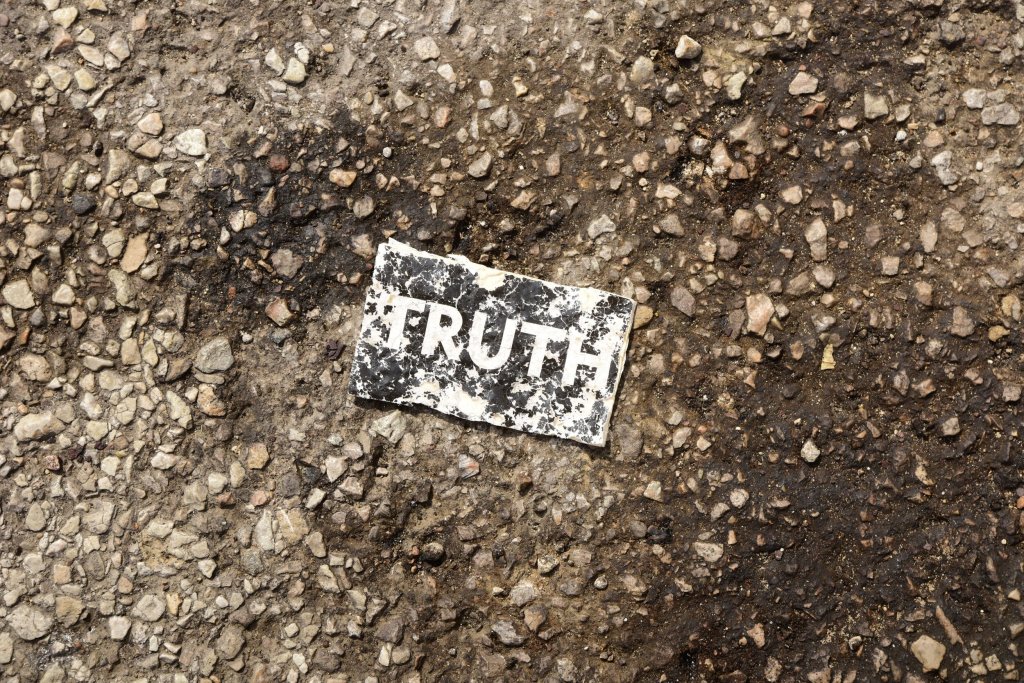
    Valuing Truth

    Hard to watch the events of this past week. My heart breaks for it all.

    It’s made me reflect on what it means—for us, and for me—to be a person who values truth.

    Truth is a hard thing to value. I’ve thought about that a lot, not least because my vocation makes a lot of truth claims, and also carries the temptation of fudging the truth sometimes. There are a lot of ways for preachers to play fast and loose with the truth, and any preacher that’s not *really* aware of the dangers of the rhetorical toolbox we carry around is like somebody carrying a pistol without knowing where the safety is.

    The rhetorical toolbox has some useful but mischievous tools, you know. Overstatement. Understatement. Telling stories that evoke emotion. Selecting data that matches your narrative, and culling that which detracts. The art of knowing your crowd well enough to see how far you can push and when you’d best pull back a smidge. Knowing what coals of passion lie smoldering, just needing somebody to give them a little oxygen to make them come alive. It’s powerful stuff. And dangerous.

    Of course, I’m not just a speaker, but a listener, too. I don’t just use rhetoric—I’m on the receiving end of a lot of it too. There are folks who want to use me, and who point all those tools squarely in my direction. Some of them don’t seem to be that conscientious about what their rhetoric does. Imagine a long-time gun instructor showing up at the shooting range only to find a reckless crowd passing around loaded weapons pointing every-which direction. No safeties on, everything loaded, people carrying four or five weapons in each hand. Pistols lay on the tables, easily within reach of the kids wandering around while the adults laugh with each other, oblivious. They are clearly enjoying the power in their hands, everybody’s having a great time. But what do you think that instructor thinks—feels— in that situation?

    I’m just saying that when it comes to the way we use rhetoric—a powerful tool for both the honest and dishonest—I feel a lot like that guy. (And yes, for those paying attention, this story too is rhetoric. See how easy it is?)

    We need to be a lot more conscientious with how we both use rhetoric and also much more savvy with how we consume it. But we need to recognize that it’s hard work. That’s what I meant when I wrote above that I’ve thinking about what it means to be a person who values truth. It’s one thing to say something is a *value*, but values constantly ask back, “Really? How much am I really worth to you? What are you willing to do, to give?”

    Valuing the truth when I have to mic (or keyboard), means I have to think carefully about whether what I’m saying is strictly true, or whether I’m shading the truth. Even if what I’m saying is ultimately in the service of the truth, I have to ask whether I’m asking people to skip steps, or take shortcuts. I have to ask how much I’m relying on people’s trust and what kind of trust habits I’m encouraging or discouraging in them. If I’m only telling one side of a story, I have to ask whether the people in my crowd are really aware of the other side…do they know the best reasons to take the other side? Am I representing the other side fairly? Before I pass on information, I have to ask whether my sources are really solid or not; why do I trust them and should/would other people?

    On the other side, being someone who demonstrates that I value truth in the way I receive rhetoric is hard work, too. Most of what we have pointed at us is meant to get us stirred up, to inflame us. It’s hard work to filter out when people are really fairly representing their opponents (spoiler alert: they aren’t) or to figure out which sets of facts are really accurate. When I’m paying attention, I find that a lot of people assume that we won’t do any work—they feel like they can pass on untrue things with true impunity, knowing they won’t *really* be held accountable. What they really know is a powerful pair of vulnerabilities: many of us are willing to accept facts we want to be true, and we move on to the next controversy quickly. Think about how dangerous those two are. Mercy!

    As a result, people with powerful platforms feel (know) that their audience is willing to believe something that may or may not be true, and that they next week they won’t really care about how it panned out. They don’t believe we are willing to put in the work of really evaluating what they say and they don’t think we’ll really care about the particulars by next week anyways. To be clear, they think that about *me*. Some days, they’re right. It’s hard work, after all. Some days I frankly don’t value truth as much as I say I do, and when somebody shows me a shortcut, I take it.

    My friends, it is really, *really* important that we cultivate a sincere valuing of the truth. It just has to become more important to us if we’re going to have a solid functioning society.

    We haven’t adapted well to the changes in the world, where everyone has these mass communication opportunities. In the old world, a small number of people had access to a small number of podiums. A small number of people decided what got printed and published. Now, everybody is a mass communicator. Everybody is a publisher. And while we’ve bought into the idea that everybody should have those opportunities, we’ve been really slow to recognize that it also means everybody has the responsibilities that come with those opportunities.

    There are some good things about the democratization of communication, I think, but only if we’re *much* more discerning about how we consume the flood that is coming at us. We haven’t kept up with the disciplines of truth, as either speakers or hearers. And we’re in trouble because of it.

    My friends, I implore you: let’s commit ourselves to honoring, treasuring and valuing truth.

    Let’s commit to doing the hard work of weighing claims and facts, to not taking shortcuts when people make claims that we’d *like* to be true or when they push facts that match up with the narrative that is belongs to *our side*.

    Let’s commit to returning to the art of persuasion, attentively considering the best arguments of our opponents. Let us reject the rhetoric of inflammation, that locks our attention into the aspects of the opposition we find most ridiculous.

    Let’s lengthen our memories a bit, and stop listening to people who recklessly make a habit of passing on misinformation.

    We got here by being lazy, and it was foolish. To heal requires our collective repentance, and a commitment to put in the work to build something different.

    May God give us the courage, wisdom, and strength to become people of truth.